
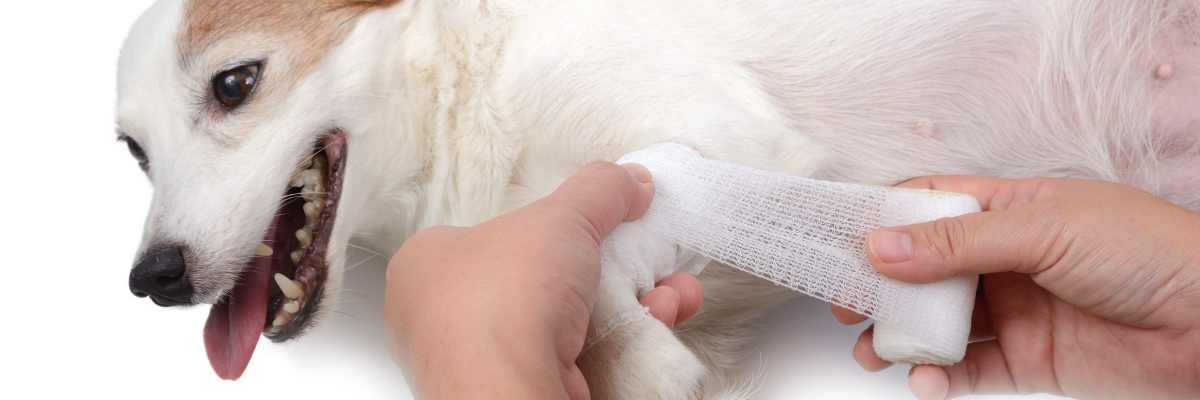
Being a pet parent is a joy, filled with cuddles, playtime, and unconditional love. But it also comes with the responsibility of ensuring their health and safety. Accidents and emergencies can happen, and knowing basic first aid can make all the difference between a stressful situation and a calm, potentially life-saving intervention. This isn’t about replacing your vet, but rather empowering you to provide immediate care and stabilize your pet until professional help arrives.
Why First Aid? Because Every Second Counts!
Think of it this way: you wouldn’t want to be helpless if a loved one needed immediate assistance, right? The same applies to your pet. Knowing how to handle common emergencies like bleeding, choking, or poisoning can significantly improve their chances of a full recovery. Plus, being prepared will reduce panic and allow you to think clearly when time is of the essence.
Building Your Pet First Aid Kit: Your Emergency Arsenal
Before we dive into specific first aid techniques, let’s talk about assembling a well-stocked first aid kit. Keep it in an easily accessible location, and make sure everyone in the household knows where it is. Here’s what you’ll need:
- Gauze pads and rolls: For wound cleaning and bandaging.
- Adhesive tape: To secure bandages.
- Antiseptic wipes or solution: For cleaning wounds (avoid alcohol-based solutions, which can sting).
- Sterile saline solution: For flushing eyes or wounds.
- Blunt-ended scissors: For cutting bandages or removing fur around a wound.
- Tweezers: For removing splinters or debris.
- Digital thermometer (rectal): A regular human thermometer can be used, but dedicate it solely to your pet.
- Petroleum jelly: To lubricate the thermometer.
- Latex or non-latex gloves: For your own protection.
- Emergency blanket: To help maintain body temperature.
- Muzzle or soft cloth: To prevent biting (even the sweetest pet might bite when in pain).
- Hydrogen peroxide (3%): Use only under the direction of a veterinarian to induce vomiting. More on this later.
- Contact information: Your veterinarian’s number, the nearest emergency vet clinic, and the ASPCA poison control hotline.
- Pet carrier or crate: For safe transport to the vet.
Pro Tip: Check your kit regularly and replace expired items. A well-maintained kit is a prepared kit!
Dealing with Bleeding: Stop the Flow, Stay Calm
Bleeding is a common emergency, and knowing how to control it is crucial. Here’s what to do:
- Apply direct pressure: Use a clean gauze pad and apply firm, steady pressure directly to the wound. Don’t peek! Maintain pressure for at least 5-10 minutes.
- Elevate the injured area: If possible, elevate the wound above the heart to help reduce blood flow.
- If bleeding continues: Apply a pressure bandage. Wrap the gauze firmly, but not so tightly that it cuts off circulation. Check the toes (if applicable) for swelling or discoloration, which could indicate the bandage is too tight.
- Seek veterinary attention: Even if you manage to stop the bleeding, it’s essential to have your vet examine the wound to check for underlying damage and prevent infection.
Important Note: For severe bleeding, apply a tourniquet only as a last resort and only if you’re unable to control the bleeding with direct pressure and elevation. A tourniquet can cause permanent damage if left on for too long, so get your pet to the vet immediately. Make sure to note the time the tourniquet was applied.
Choking Hazards: Quick Actions Can Save a Life
Choking is a terrifying experience, but quick action can be life-saving. Here’s how to help a choking pet:
- Check their mouth: Carefully open your pet’s mouth and look for any visible obstructions. If you see something, try to remove it with your fingers or tweezers. Be careful not to push the object further down.
- The Heimlich maneuver: If you can’t see or remove the obstruction, perform the Heimlich maneuver.
- For dogs: Stand behind your dog and wrap your arms around their abdomen. Make a fist with one hand and place it just below the rib cage. Grasp your fist with your other hand and give a quick, upward thrust. Repeat several times until the object is dislodged.
- For cats and small dogs: Hold your pet upside down, supporting their back. Use the heel of your hand to deliver sharp blows between their shoulder blades.
- If your pet loses consciousness: Begin CPR (see below).
- Seek veterinary attention: Even if you successfully dislodge the object, it’s important to have your vet check for any injuries to the throat or lungs.
Pro Tip: Prevention is key! Keep small objects, bones, and toys that could be choking hazards out of your pet’s reach.
CPR for Pets: A Skill That Could Make All the Difference
CPR (Cardiopulmonary Resuscitation) is a life-saving technique that can help revive a pet who has stopped breathing or whose heart has stopped beating. Here’s a simplified guide:
- Check for responsiveness: Gently shake your pet and call their name. If they don’t respond, check for breathing and a heartbeat.
- Check for breathing: Look for chest movement or listen for breath sounds. If your pet isn’t breathing, proceed to rescue breathing.
- Rescue breathing:
- Close your pet’s mouth and hold it shut.
- Extend their neck and pull the tongue forward.
- Place your mouth over your pet’s nose, creating a seal.
- Give two breaths, watching for chest rise.
- Repeat every 5 seconds.
- Check for a heartbeat: Place your fingers on the inside of your pet’s thigh, near the groin, to feel for a pulse. If you don’t feel a pulse, begin chest compressions.
- Chest compressions:
- For small dogs and cats: Place one hand on either side of the chest, just behind the elbows.
- For medium to large dogs: Place one hand on top of the other on the widest part of the chest.
- Compress the chest about 1-2 inches for small pets and 2-3 inches for larger pets.
- Perform 30 compressions at a rate of 100-120 compressions per minute.
- Continue CPR: Alternate between rescue breathing (2 breaths) and chest compressions (30 compressions) until your pet starts breathing or you reach veterinary help.
Important Note: CPR is a physically demanding procedure. Don’t give up easily, but be prepared to rotate with someone else if possible.
Heatstroke and Hypothermia: Keeping Your Pet at the Right Temperature
Pets are susceptible to both heatstroke and hypothermia, and both conditions can be life-threatening.
Heatstroke:
- Symptoms: Excessive panting, drooling, weakness, vomiting, diarrhea, collapse.
- Treatment:
- Move your pet to a cool, shaded area.
- Offer small amounts of cool water.
- Apply cool (not ice-cold) water to their body, especially the groin, armpits, and paws.
- Use a fan to circulate air.
- Seek immediate veterinary attention.
Hypothermia:
- Symptoms: Shivering, weakness, lethargy, slow breathing, pale gums.
- Treatment:
- Move your pet to a warm, dry place.
- Wrap them in a warm blanket.
- Offer warm (not hot) water or broth.
- Use a warm water bottle wrapped in a towel to provide additional warmth.
- Seek veterinary attention.
Pro Tip: Prevention is key! Never leave your pet in a parked car, even on a mild day. Provide plenty of fresh water and shade during hot weather. Limit their exposure to cold weather and provide them with warm shelter.
Poisoning: Act Fast, Identify the Culprit
If you suspect your pet has ingested something poisonous, time is of the essence.
- Identify the poison: If possible, determine what your pet ingested. This will help the vet determine the best course of treatment.
- Call your veterinarian or the ASPCA Poison Control Hotline (888-426-4435) immediately. Do not try to induce vomiting without consulting a professional.
- Follow their instructions carefully. In some cases, they may advise you to induce vomiting. Use only 3% hydrogen peroxide, and only if instructed by a veterinarian or poison control. The typical dose is 1 teaspoon per 5 pounds of body weight, given orally.
- Bring the suspected poison container to the vet.
Important Note: Not all poisons can be safely vomited. Inducing vomiting in certain situations can cause more harm than good. Always consult a professional before inducing vomiting.
Seizures: Stay Calm and Protect Your Pet
Witnessing a seizure can be frightening, but it’s important to stay calm and protect your pet from injury.
- Clear the area: Remove any objects that could harm your pet.
- Don’t restrain them: Let the seizure run its course.
- Time the seizure: Note the start and end time of the seizure.
- Speak calmly and gently: This can help reassure your pet.
- After the seizure: Keep your pet warm and comfortable.
- Seek veterinary attention: Even if the seizure stops on its own, it’s important to have your vet examine your pet to determine the cause.
Pro Tip: Video record the seizure to show your vet. This can help them diagnose the underlying cause.
Burns: Cool It Down, Seek Help
Burns can be caused by heat, chemicals, or electricity. Here’s how to respond:
- Cool the burn: Immediately flush the burned area with cool water for at least 10-15 minutes.
- Protect the burn: Cover the burn with a clean, dry bandage.
- Seek veterinary attention: Burns can be painful and prone to infection.
Important Note: Do not apply ice or butter to a burn. These can actually worsen the injury.
Eye Injuries: Handle with Care
Eye injuries can be serious and require prompt attention.
- Prevent further injury: Keep your pet from rubbing or pawing at their eye.
- Flush the eye: Use sterile saline solution to flush out any debris.
- Seek veterinary attention: Eye injuries can quickly lead to vision loss.
Pro Tip: A cone of shame (Elizabethan collar) can prevent your pet from further injuring their eye.
Frequently Asked Questions About Pet First Aid
- How do I take my pet’s temperature? Use a rectal thermometer lubricated with petroleum jelly. Gently insert it about 1 inch into the rectum. A normal temperature for dogs and cats is between 100.5°F and 102.5°F.
- What’s a normal heart rate for a dog or cat? A normal heart rate varies depending on the size and breed of your pet. Generally, a dog’s heart rate is between 60-140 beats per minute, and a cat’s is between 140-220 beats per minute.
- How do I muzzle my dog safely? Use a soft cloth or gauze roll to create a makeshift muzzle. Wrap it around their muzzle, crossing it under their chin, and tie it behind their head.
- When should I call the emergency vet? Call the emergency vet immediately for any life-threatening situation, such as difficulty breathing, severe bleeding, loss of consciousness, or suspected poisoning.
- Can I use human medication on my pet? Never give your pet human medication without consulting your veterinarian. Many human medications are toxic to pets.
Knowledge is Power: Be Prepared, Be Confident
Learning basic pet first aid isn’t just about knowing what to do; it’s about empowering yourself to act confidently and effectively in an emergency. Remember, these skills are meant to provide immediate care and stabilize your pet until you can get them to a veterinarian for professional treatment. Investing in a pet first aid course and keeping your knowledge fresh will give you the confidence to be your pet’s first line of defense when they need it most.